Small Changes, Compounding Returns: The Case for Continuous Improvement
OPERATIONAL EXCELLENCECONTINUOUS IMPROVEMENTPROCESS IMPROVEMENT
6/11/2026
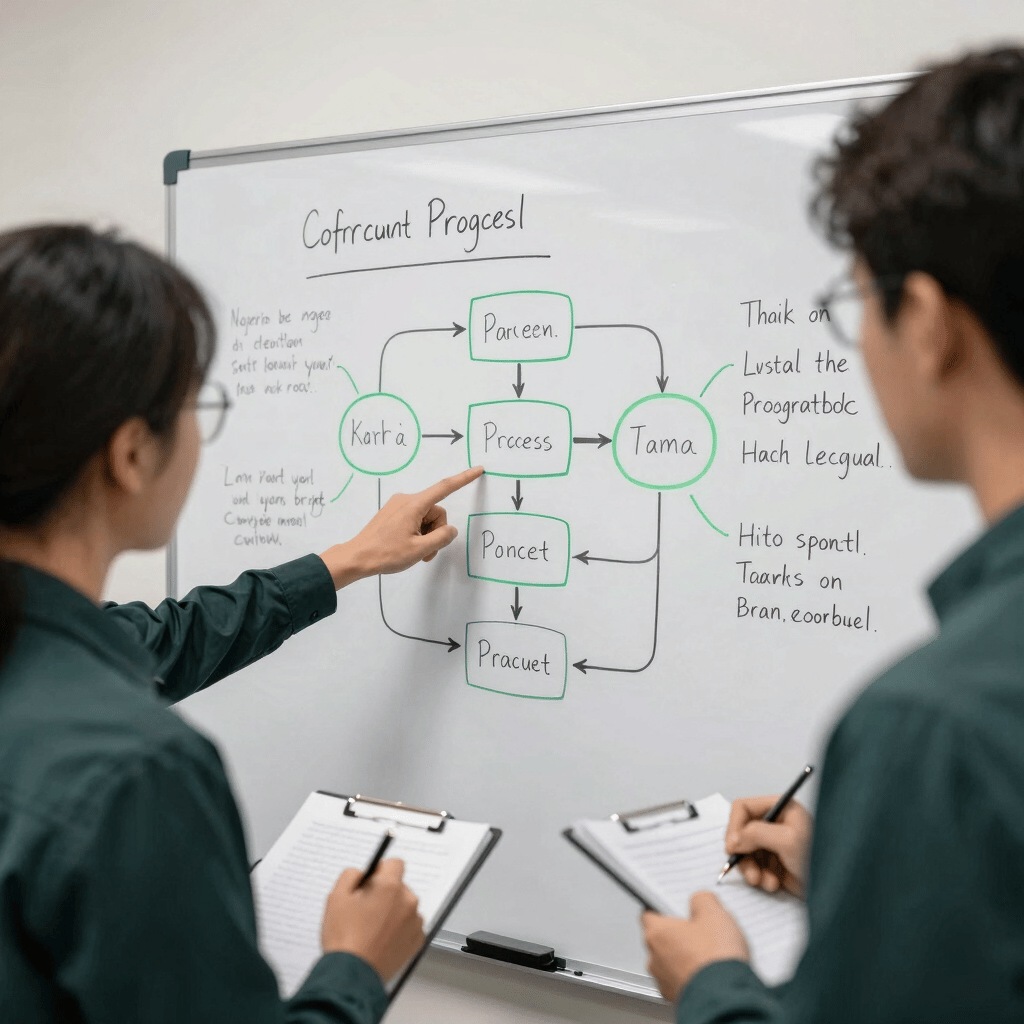
There is a seductive idea in business improvement: the transformation. The comprehensive overhaul that addresses everything at once, resets the operating model, and produces a step-change in performance. Transformations are real. They happen. But the research on them — as we detailed in Post 7 of this series — shows that 88% fail to meet their original ambitions, and the ones that succeed do so through the patient, iterative work of building new behaviors over time. The transformation, in other words, succeeds when it is powered by the same discipline as continuous improvement.
Kaizen — which translates from Japanese as "change for the better" — is the operational philosophy that systematized this insight into one of the most studied and proven improvement frameworks in business history. Developed in post-war Japan in collaboration with American management consultants and refined through decades of Toyota Production System discipline, kaizen is founded on a deceptively simple premise: small, consistent, incremental improvements — made by the people closest to the work, sustained over time — produce results that occasional major overhauls cannot match.
25–95% profit improvement from a 5% increase in customer retention — the compounding logic of kaizen applied to one of its most commercially significant dimensions: reducing the operational failures that drive customer departure
Bain & Company / Continuous Improvement Research Connection
What Continuous Improvement Actually Produces
The academic research on kaizen and lean improvement implementations is extensive and remarkably consistent in its findings. Kareska's 2024 quantitative analysis of kaizen implementation in manufacturing processes — tracking KPIs before and after structured continuous improvement — found significant improvements in both productivity and efficiency, with meaningful reductions in cycle time and defect rates alongside increases in overall production. Cardiff University's longitudinal research on lean program implementation across the Volvo Group's global operations documented that performance improvement follows an S-curve pattern: slow initial gains, then rapid acceleration, then a plateau — with the businesses that sustain the practice moving to a new S-curve, while those that treat it as a project stagnate.
The U.S. Environmental Protection Agency's lean and kaizen documentation — one of the most practically detailed bodies of research on small-scale implementation — confirms the core mechanism: kaizen focuses on eliminating waste, improving productivity, and achieving sustained continual improvement by involving workers at multiple functions and levels, using tools like value stream mapping and the "5 Whys" to identify root causes and opportunities quickly.
12% reduction in operational waste for businesses that conduct quarterly efficiency audits — the light version of a sustained continuous improvement practice
PwC Operational Excellence Research
S-curve the pattern of lean performance improvement: slow initial gains → rapid acceleration → plateau → new S-curve for organizations that sustain the discipline
Cardiff University / Volvo Group Lean Research
60% of operational waste in the average business is addressable through process improvement before any technology investment is required
McKinsey / Crebos Operations Research
5 Whys the foundational kaizen root-cause analysis technique — asking "why" five times to move from symptom to structural cause, enabling fixes that prevent recurrence
Toyota Production System / EPA Lean Methodology
The Continuous Improvement Mindset vs. the Transformation Mindset
The critical distinction between continuous improvement and transformation is not about scale or ambition. It is about rhythm and ownership. A transformation is episodic: a major investment of time and resources, concentrated over a defined period, led by leadership or external consultants, aimed at a step-change in performance. Continuous improvement is ongoing: a weekly or monthly practice, distributed across the team, aimed at incremental gains that accumulate into structural improvement over time.
In truly lean organizations, continuous improvement is not a program. It is a natural way of thinking for both managers and frontline employees — the operating assumption that every process has room to improve, and that the people doing the work are the most qualified to identify how.
— Lean Production / Toyota Production System / EPA Lean Thinking Research
AchieveIt's research on western versus Japanese organizational models — referenced in Post 6 of this series — found that the most significant performance differentiator between them was not technology, capital, or talent. It was the proportion of organizational energy devoted to continuous improvement versus firefighting. Japanese manufacturing companies allocated 60% of their operational energy to continuous improvement and strategic planning; western companies averaged 60% to firefighting and only trace proportions to structured improvement. The compounding effect of that allocation difference, sustained over years, is what produced the productivity differentials that reshaped global manufacturing.
Building a Continuous Improvement Practice in a Small Business
The most common failure mode in small business continuous improvement is treating it as a project that requires dedicated time, specialized training, and formal infrastructure before it can begin. The academic research and practical implementation experience consistently show the opposite: the highest-impact continuous improvement practices are simple, frequent, and integrated into the existing operating rhythm rather than added on top of it.
1 The weekly process question
The simplest possible continuous improvement mechanism: at the end of each weekly team review, one question is asked — "what is one thing about how we worked this week that we could do better or eliminate next week?" The answers are logged, prioritized, and actioned within one to two cycles. This practice requires no infrastructure, no training, and no additional meeting time. It installs the continuous improvement mindset — the expectation that every process is improvable — as a normal feature of weekly operations. Over twelve months, the accumulation of small improvements from this single practice is measurable.
2 Value stream mapping of your highest-cost processes
Value stream mapping — drawing out every step in a core process, the time each step takes, and the handoffs between steps — makes waste visible in a way that verbal description cannot. The exercise of mapping a process that has never been explicitly documented almost always reveals wait times, redundant steps, and handoff friction that the people executing it have normalized but that represent recoverable capacity. PwC's research finding that companies conducting quarterly efficiency audits recover 12% of operational waste is best understood as the commercial result of this mapping discipline applied consistently.
3 The 5 Whys for every recurring problem
Most recurring operational problems — the customer complaint that keeps appearing, the process step that consistently produces errors, the deadline that repeatedly gets missed — are addressed at the symptom level rather than the cause level. The 5 Whys technique asks why the problem occurred, then why that answer is true, and repeats the process five times until the structural root cause is identified. The Toyota Production System's decades of application demonstrate that this simple technique, applied consistently, prevents the firefighting cycles that consume operational capacity without producing improvement — because it converts reactive problem-solving into structural learning.
4 Quarterly improvement sprints on highest-priority processes
Beyond the weekly cadence, a quarterly two-to-three-day focused improvement event on the process that has been generating the most waste, errors, or customer friction delivers a more concentrated improvement gain. These events involve the people who actually execute the process, use a structured problem-solving approach, and produce a specific revised process design that is documented, tested, and standardized. The Kaizen event research from the University of Twente's 2024 archival study of 79 kaizen events found that those with structured processes, cross-functional teams, and clear success metrics produced the most measurable operational performance improvement.
The Compounding Logic
The mathematical case for continuous improvement over episodic transformation is simply the mathematics of compounding. A business that improves its core processes by 1% per week — a modest, achievable target — improves by roughly 67% over the course of a year. The same business that runs a major improvement initiative once a year, achieves a 20% step-change, and then stagnates has produced a fraction of that gain. The continuous improvement organization does not need dramatic transformations because the discipline of ongoing improvement makes transformations less necessary over time.
For a small or midsize business, the entry point is simple: pick the one process that is causing the most recurring problems, map it explicitly, ask why problems occur five times in succession, make one specific structural change, measure the result, and repeat. The discipline is not complex. What it requires is the organizational commitment to treat improvement as a normal, ongoing function of the business — not an exception, and not a crisis response.
Contact
Let's improve your business together.
contact@rmsc-consulting.com
© 2026 All rights reserved.