
The Hidden Cost of Complexity
OPERATIONAL EFFECTIVENESS
1/7/2026
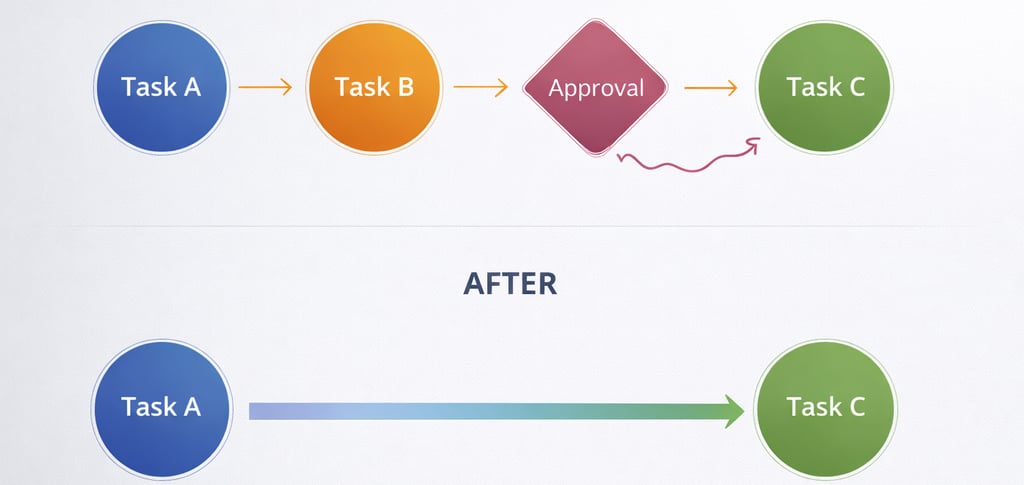
Complexity rarely announces itself as a problem. It doesn’t appear as a single line item on a financial statement or show up as an obvious failure. Instead, it quietly accumulates—slowing decisions, increasing cost, and frustrating teams.
Most organizations don’t become complex by accident. Complexity is usually the result of well-intentioned decisions: adding approvals to reduce risk, creating exceptions to satisfy customers, layering reports to improve visibility, or allowing variations to accommodate growth. Each change makes sense in isolation. Over time, they create friction that becomes difficult to see—and even harder to remove.
The real cost of complexity isn’t just operational. It’s strategic.
When decisions require multiple approvals, opportunities are missed. When processes differ by team, quality becomes inconsistent. When roles overlap, accountability weakens. Teams spend more time navigating the organization than creating value. Productivity declines, even though effort increases.
What makes complexity especially dangerous is that it often feels like control. More rules, more checkpoints, and more documentation can create the illusion of safety. In reality, excessive complexity reduces clarity and slows execution. Leaders end up closer to the work, not because they want to be, but because the system can’t function without them.
High-performing organizations take a different approach. They actively remove complexity. They simplify workflows, clarify ownership, and standardize where it creates leverage. This doesn’t mean stripping out necessary controls or oversimplifying the business. It means designing systems that support speed, consistency, and accountability.
Simplicity allows teams to focus. Decisions become faster because expectations are clear. Accountability improves because ownership is defined. Performance stabilizes because work is done the same way, every time.
Complexity does not resolve itself. If left unchecked, it grows.
Organizations that scale successfully treat simplification as an ongoing discipline. They regularly ask whether a process still adds value, whether a report still drives a decision, and whether an approval still serves a purpose. Reducing complexity isn’t about doing less for the sake of it—it’s about doing what matters, well.
Contact
Let's improve your business together.
contact@rmsc-consulting.com
© 2026 All rights reserved.